
Knowing when to change engine oil is essential for keeping your car running smoothly and avoiding expensive repairs. However, many UK drivers still follow outdated advice, such as changing oil every 3,000 miles.
Modern vehicles have different requirements depending on engine type, mileage, oil quality and driving conditions. Here’s what you need to know.
How Often Should You Change Engine Oil?
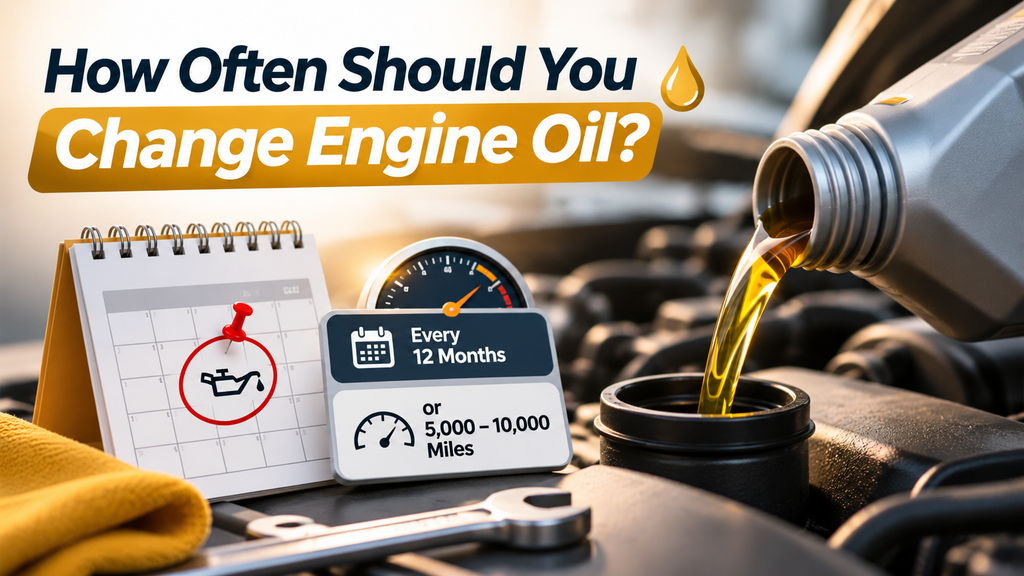
Most modern cars require an oil change approximately every 5,000–10,000 miles or 12 months, although some manufacturers recommend longer or shorter intervals.
| Driving Conditions | Oil Change Guidance |
| Normal driving | Follow manufacturer recommendations |
| Frequent short journeys | May require more frequent changes |
| Motorway driving | Follow the approved service interval |
| Low-mileage vehicles | Follow time-based servicing requirements |
| Heavy towing | Check severe-service recommendations |
Tip: Always follow your vehicle manufacturer’s recommended mileage or time interval, whichever comes first.
5 Warning Signs Your Engine Oil Needs Attention
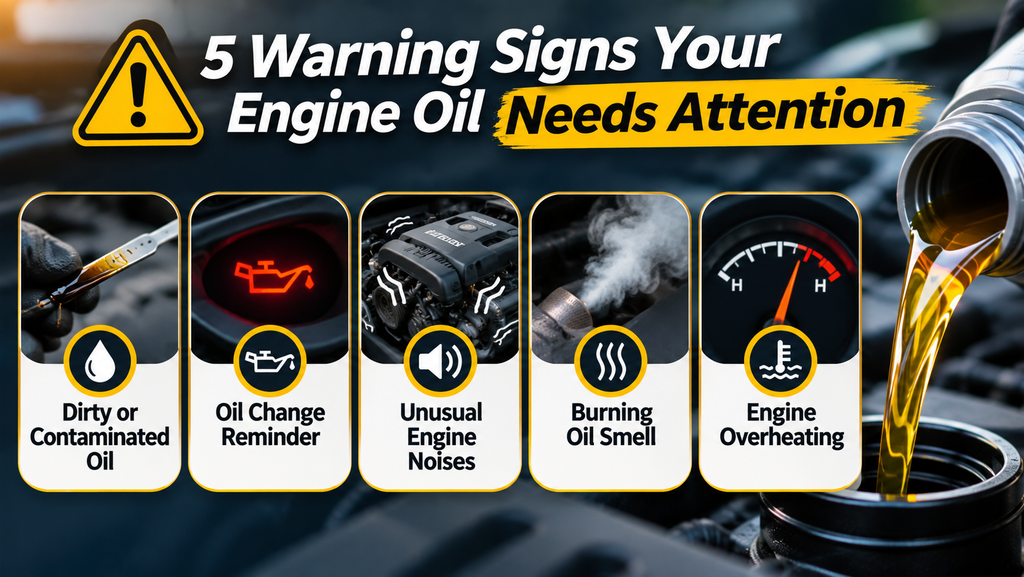
Watch for these common warning signs:
- Contaminated oil: Sludge or unusual particles may indicate a problem.
- Oil-change reminder: Your dashboard indicates servicing is due.
- Unusual engine noises: Ticking or knocking may indicate lubrication problems.
- Burning oil smell: Could suggest leakage or overheating components.
- Overdue servicing: You’ve exceeded the recommended oil-change interval.
These symptoms can also indicate other mechanical problems. An oil-pressure warning requires immediate attention: stop safely and switch off the engine.
What Happens If You Don’t Change Engine Oil?
Delaying an oil change can lead to:
- Engine wear: Degraded oil may provide less effective lubrication.
- Sludge buildup: Contaminants can accumulate and restrict oil circulation.
- Reduced protection: Engine components may experience increased friction.
- Expensive repairs: Severe lubrication problems can cause significant engine damage.
Regular maintenance helps protect your engine and avoid unnecessary expenses.
Does Driving Style Affect Oil Changes?
Yes. Frequent short journeys, stop-start traffic and cold starts can increase oil contamination.
Long motorway journeys generally provide more consistent engine operating temperatures.
If you regularly drive in demanding conditions, check whether your manufacturer recommends shorter service intervals.
Which Engine Oil Should You Choose?
Different engines require different oil specifications.
| Engine Oil | General Characteristics |
| Conventional | Mineral-based oil for suitable engines |
| Semi-Synthetic | Combination of mineral and synthetic base oils |
| Fully Synthetic | Often designed for demanding modern engines |
Common UK oil grades include 0W-20, 5W-30 and 5W-40.
Always check your vehicle handbook for the correct viscosity and manufacturer approvals.
Explore suitable engine oils and maintenance essentials at Bilal Lubricant.
Common Engine Oil Change Myths

- Myth 1: Every car needs an oil change every 3,000 miles.
- Fact: Many modern vehicles have longer approved intervals.
- Myth 2: Synthetic oil never needs changing.
- Fact: All engine oils require periodic replacement.
- Myth 3: Black engine oil always needs replacing.
- Fact: Oil can darken during normal operation without needing immediate replacement.
Conclusion
Knowing when to change engine oil helps maintain engine performance, reliability and lifespan.
Follow your manufacturer’s service schedule, check oil levels regularly and use the correct lubricant.
For your next service, browse the engine oil range at Bilal Lubricant.
FAQs
How often should you change engine oil in the UK?
Many cars require oil changes every 5,000–10,000 miles or 12 months, but intervals vary by manufacturer.
Can I drive 10,000 miles without changing oil?
Yes, if your manufacturer approves that interval and you haven’t exceeded the time limit.
Should I change oil even if I rarely drive?
Yes, if your vehicle reaches its recommended time-based servicing interval.
Hi, this is a comment.
To get started with moderating, editing, and deleting comments, please visit the Comments screen in the dashboard.
Commenter avatars come from Gravatar.